
Toddler Social Development At Home
📖 Table of Contents
I remember the first time my toddler, Maya, stood on the edge of the playground and stared at the other kids. She was only 18 months old, and I watched as she slowly backed away, her little hands gripping the fence. It was a moment that stopped me in my tracks — not just because of the sadness, but because it made me realize how important social development is, even at that early age. I knew then that I had to create an environment at home that nurtured her ability to connect, communicate, and play with others. That’s how I began building a routine around toddler social development at home.[1]
At home, I started with small, deliberate steps — like turning our living room into a space for pretend play, where Maya could mimic the world around her. We set up a tiny kitchen with real plates and cups, and I’d sit beside her as she pretended to make lunch for her dolls. The way she’d giggle, the way she’d look up at me with those big eyes — it felt like I was laying the groundwork for something bigger, something that would one day help her thrive in a classroom or on the playground.[5]
Over the next few months, I saw changes — small ones, but meaningful. Maya began to point at things and share her toys, even if it was just a squeaky rubber duck. She started to use words like 'more' and 'mine,' and she’d even smile at other kids when they came over. It wasn’t magic, but it was purposeful. I was learning that toddler social development at home isn’t about forcing interaction. It’s about creating opportunities, being present, and watching those tiny steps turn into big leaps.
Why You'll Love This Approach to Toddler Social Development at Home
- Builds confidence in communication and empathy early
- Strengthens emotional intelligence through daily interactions
- Creates a foundation for future group settings like school
- Encourages independence and curiosity through play
The Power of Pretend Play
As of August 2026, I set up a small 'restaurant' in our living room with a tiny table, napkins, and a set of plastic utensils. My toddler, Maya, would sit across from me, pretending to serve me a meal. It was amazing to watch her use words like 'please' and 'thank you,' even if she was just mimicking me. She wasn’t just playing — she was learning how to interact with others, how to take turns, and how to express her needs.[2]
I noticed that when we played this game, Maya was more likely to use words than gestures. She’d point at the plate and say 'eat,' and I’d respond with 'thank you.' These exchanges, though simple, were building her language skills and helping her understand that communication is a two-way street.
As the weeks went on, I started inviting other parents and their toddlers over for these playdates. Suddenly, Maya was trying to share her 'food' with the other kids. It was a small shift, but it marked the beginning of her understanding that others have needs and wants too — a critical part of social development.
Use a corner of your living room, or even a blanket on the floor, to create a designated area for pretend play. Add items like a small table, chairs, and a few props. You’ll be surprised at how much your toddler will engage with it.
Part of our Toddler social development guide.
The Importance of Routines
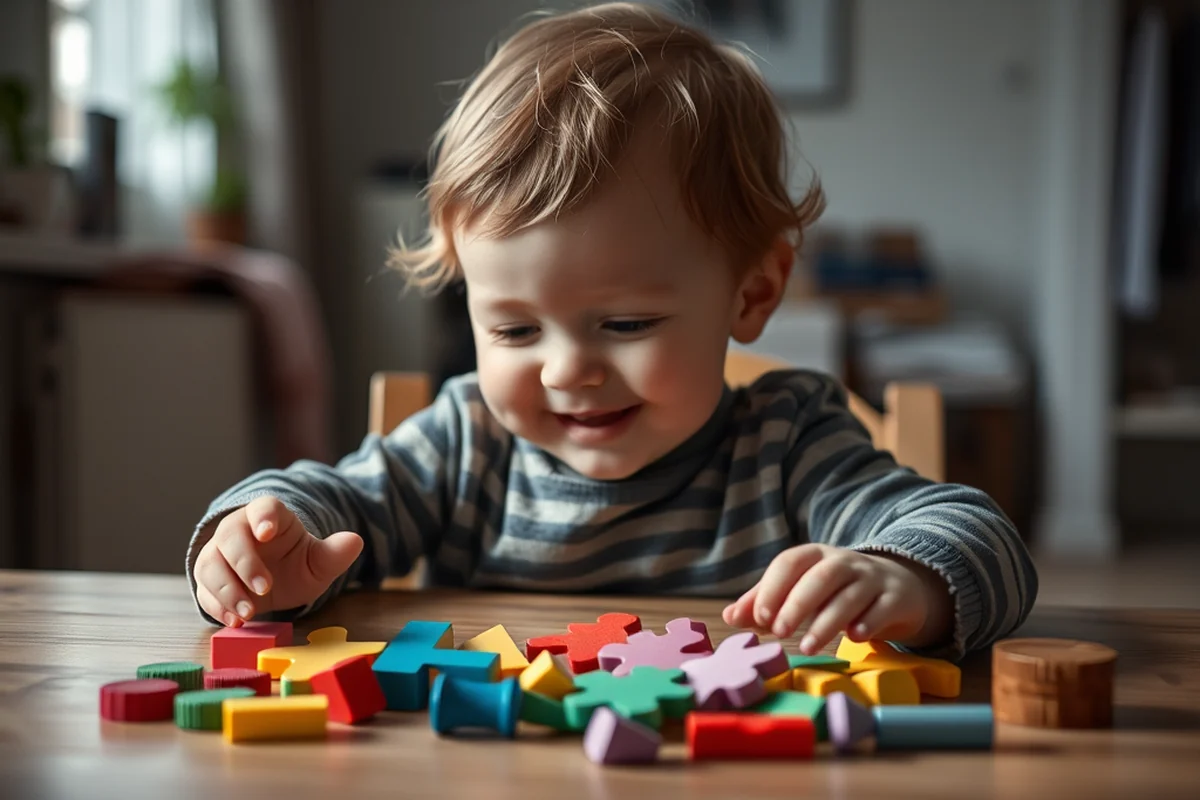
I started setting a daily routine where we played with a group of other toddlers from the neighborhood twice a week. We would meet in the park and spend 30 minutes playing on the swings, sharing toys, and taking turns. The consistency of this time helped Maya learn that she could count on these interactions and that others would be there to play with her.[3]
I also made sure to stick to a predictable schedule for meals, naps, and playtime. Knowing what was coming next gave Maya a sense of control, which made her more open to trying new things during social time. When she was tired or distracted, I would adjust the activities to match her mood, but the routine itself never changed.
Over time, I noticed that Maya was more comfortable trying new activities and engaging with others. She started to initiate play more often, and she even began to use words like 'no' and 'help' when she needed something. These small shifts were all part of her growing confidence in social situations.
Consistency is the key to building trust and social readiness in toddlers.
Related: Toddler activities for social development troubleshooting
Related: Why infant toddler social development
Related: Infant toddler social development at home
Related: Infant toddler social development mistakes
Related: Toddler Activities That Promote Social Development For Beginners
The Role of Modeling Behavior
I started to be more mindful of how I spoke to others, even when I was just talking to my toddler. I made a point of saying 'please' and 'thank you' and used kind words even when I was frustrated. I noticed that Maya began to mimic me, using those same phrases in her own interactions with me and others.
I also began to explain my actions to her. If I was playing with another adult, I would say, 'Look, I’m sharing this toy with Sarah. She’s sharing one with me.' This helped her understand that sharing was a two-way process, not just something that others did for her.
Soon, she started to use these words when she wanted to interact with her friends. I would say, 'You did a great job saying thank you!' and it made her feel proud. It wasn’t long before she was using those phrases on her own, in more natural settings.
Talk to your toddler about your own actions — even the small ones. For example, if you’re waiting for a friend, you can say, 'I’m waiting for my friend. I think they’re coming soon.' This helps your toddler understand the value of patience and social connection.
“I remember the first time my toddler, Maya, stood on the edge of the playground and stared at the other kids.”— Toddler Social Skills Development editors
Introducing Simple Games
I introduced a few simple games that involved taking turns and following directions. One of our favorites was 'pass the ball,' where we would sit in a circle and pass a soft ball around. The rules were simple: you had to say 'ball' when you received it, and then pass it to the next person.
At first, Maya didn’t understand the rules, but I made it fun by adding music and clapping along. As she got used to the game, I saw her starting to follow the rules more often. She would say 'ball' and then pass it to me, and I would say 'thank you' to her. The game became a way for her to learn how to take turns and listen to others.
Another game we played was 'follow the leader,' where I would do simple movements like jumping or clapping, and Maya would copy me. This helped her learn how to pay attention and follow directions — both important skills in social settings.
The Value of Emotional Support
I made a point of acknowledging Maya’s emotions, even the big ones. If she got frustrated during a game, I would say, 'You’re feeling upset because you wanted to take that toy. Now someone else has it.' This helped her understand that it was okay to feel that way, and it gave her the words to express her feelings.
I also taught her how to calm down when she was upset. I would sit with her, take slow deep breaths, and say, 'Let’s take a deep breath together.' This became a tool she could use when she felt overwhelmed in social situations.
Over time, I noticed that she was better at managing her emotions during playdates and group activities. She would still get upset, but she would now say, 'I’m sad,' and then take a deep breath to calm herself down. It was a small but important shift in her ability to handle social interactions.
The Benefits of Group Play
I started bringing other toddlers over for group play sessions. We would set up a variety of activities, like building with blocks or playing with puzzles, and let them explore together. I noticed that Maya was more engaged in these sessions, and she was starting to interact with the other kids more often.
One of the biggest changes I saw was in how she handled conflicts. At first, she would grab toys from the other kids, but after a few sessions, she started to ask for them instead. I noticed that she was learning how to share and how to communicate her needs in a respectful way.
Group play also helped her learn how to compromise. If two kids wanted the same toy, I would encourage them to take turns. It was amazing to see how quickly they picked up on this idea and started to work it out on their own.
Group play is where real social skills are born — through trial, error, and shared fun.
The Impact of Social Stories
I began using social stories to help Maya understand what was expected in different situations. For example, I would read a story about a child who wanted to join a game and had to ask nicely. After reading the story, I would talk to Maya about what the child did and how she could do the same.
These stories helped her understand that there were different ways to interact with others, and that it was important to be kind and respectful. I noticed that she started to use words like 'please' and 'can I' more often when she wanted to join in on a game or share a toy.
Over time, I saw her using these skills in real-life situations. She would now ask nicely before taking something from another child, and she would even say 'thank you' when someone shared with her. These small changes were making a big difference in how she interacted with others.
🧘♀️ Gentle Approach
Focus on creating a calm, comforting environment where your toddler feels safe to explore and interact at their own pace.
🚀 Fast-Track Approach
Use structured activities and games to accelerate social development while maintaining a fun, engaging atmosphere.
✈️ Travel/away-from-home Approach
Bring social development tools with you on the go — like portable toys and social stories to keep your toddler connected and learning even when you're away.
👥 Multiples Approach
Tailor your social development strategies to work well with multiple toddlers, encouraging cooperation and shared learning experiences.
🔄 Regression Reset Approach
Revisit and reinforce social skills after a period of regression, using familiar routines and positive reinforcement to rebuild confidence.
| The mistake | Why it happens | The fix |
|---|---|---|
| Forcing interaction with others | Forcing a toddler to interact can create anxiety and make them reluctant to engage with others in the future. | Let your toddler lead the interaction. Follow their interests and invite others in a way that feels natural and comfortable for them. |
| Not modeling positive social behavior | Children learn from what they see, so if you're not modeling kindness and cooperation, they may not understand how to act in social settings. | Be mindful of your own behavior and use kind, respectful language. Explain your actions to your toddler and show them how to interact with others. |
| Overlooking the importance of emotional support | Without emotional support, toddlers may struggle to manage their feelings during social interactions, leading to frustration or withdrawal. | Validate your toddler's emotions, teach them simple coping strategies, and provide a safe space for them to express their feelings. |
| Assuming all toddlers need group play | Some toddlers may prefer one-on-one interactions or may need more time to adjust to group settings. | Respect your toddler's individual needs and offer a variety of social experiences, including one-on-one time and group play. |
Toddler Social Development At Home
Common Questions
What are some signs that my toddler is developing social skills well?
How can I help my toddler learn to take turns?
What should I do if my toddler is not interested in playing with others?
How can I teach my toddler to share?
Cite this guide
Toddler Social Skills Development (2026). Toddler Social Development At Home. https://turntakers.com/toddler-social-development-at-home/[4]
Feel free to cite or share this guide.
References
- Introduction to Infant and Toddler Social Emotional Development (agrilifelearn.tamu.edu)
- Positive Parenting Tips: Toddlers (2–3 years old) | Child Development (cdc.gov)
- What to teach children before they learn to talk (coe.uga.edu)
- Responsive Routines, Environments, and Targeted Strategies to ... (csefel.vanderbilt.edu)
- Supporting Social & Emotional Development (easternct.edu)