
Social Emotional Learning Activities For Kids
📖 Table of Contents
- Emotion Faces and Expression Practice
- Role-Playing for Empathy and Understanding
- Emotional Journals for Reflection and Expression
- Storytelling to Explore Feelings and Choices
- Music and Movement for Emotional Expression
- Games That Teach Cooperation and Sharing
- Mindfulness and Breathing for Emotional Regulation
- Make It Your Way
- Frequently Asked Questions
When my daughter Emma first started kindergarten, she cried every time she left me at the door, even after I'd tried to prepare her with stories about making friends and playing with blocks. It was hard watching her struggle with separation anxiety and not being able to express her feelings. That's when I realized how important it was to teach her the basics of social emotional learning. These are the tools that help kids understand emotions, manage feelings, and build strong relationships — and I knew I had to get started right away.[2]
Social emotional learning (SEL) is not just about being nice. It's about helping kids recognize their own feelings, understand others' perspectives, and make thoughtful choices. I remember one day when Emma was upset because her friend took her toy. Instead of yelling, she said, 'I feel sad when you take my toy.' That was a small victory, but it showed me that SEL is not just a concept — it's a practice that can be taught through daily activities. These activities are the kind of things that don't require a big budget or a special class; they happen in the everyday moments of life.[3]
Through trial and error, I discovered that simple, consistent SEL activities can make a big difference in a child's life. I started incorporating things like emotion faces, role-play scenarios, and even short stories that mirrored Emma's experiences. The results were gradual but real — she began to express her feelings more clearly, and even asked me to help her come up with better ways to handle tough situations. Social emotional learning activities for kids are not just about the child — they're about building a foundation for a lifetime of healthy relationships, resilience, and empathy.[4]
Why You'll Love This Approach
- Easy to integrate into daily routines and playtime
- Builds emotional intelligence and self-awareness
- Supports better communication and empathy
- Encourages resilience and problem-solving skills
Emotion Faces and Expression Practice
As of September 2026, I created a set of emotion faces using paper cutouts and colored markers, showing expressions like happy, angry, sad, and surprised. We used them during our daily playtime and even hung them on the fridge so they were always visible. When Emma was upset, we'd look at the faces together and say, 'Which one feels like how you're feeling right now?' This helped her begin to articulate her emotions in a safe and visual way.[5]
One day, Emma was frustrated because she couldn't reach a book on the top shelf. Instead of throwing a tantrum, she pointed at the 'angry' face and said, 'I feel like this.' It was the first time I saw her connect a feeling with the right face. It was a breakthrough for her. I noticed that over time, she became more confident in labeling her emotions, even when they were more complex.
This activity took only a few minutes a day and had a big impact. I found that using visual tools like emotion faces made SEL more accessible for kids who are still learning to express themselves. You can make these faces with simple materials like construction paper and markers, or even use emojis on a phone screen — the key is making the emotion visible and relatable.
Cut out simple faces with different expressions and hang them in a visible place. Ask your child to point to the one that matches how they're feeling. This builds emotional literacy without pressure.
Part of our How to child social skills development guide.
Role-Playing for Empathy and Understanding
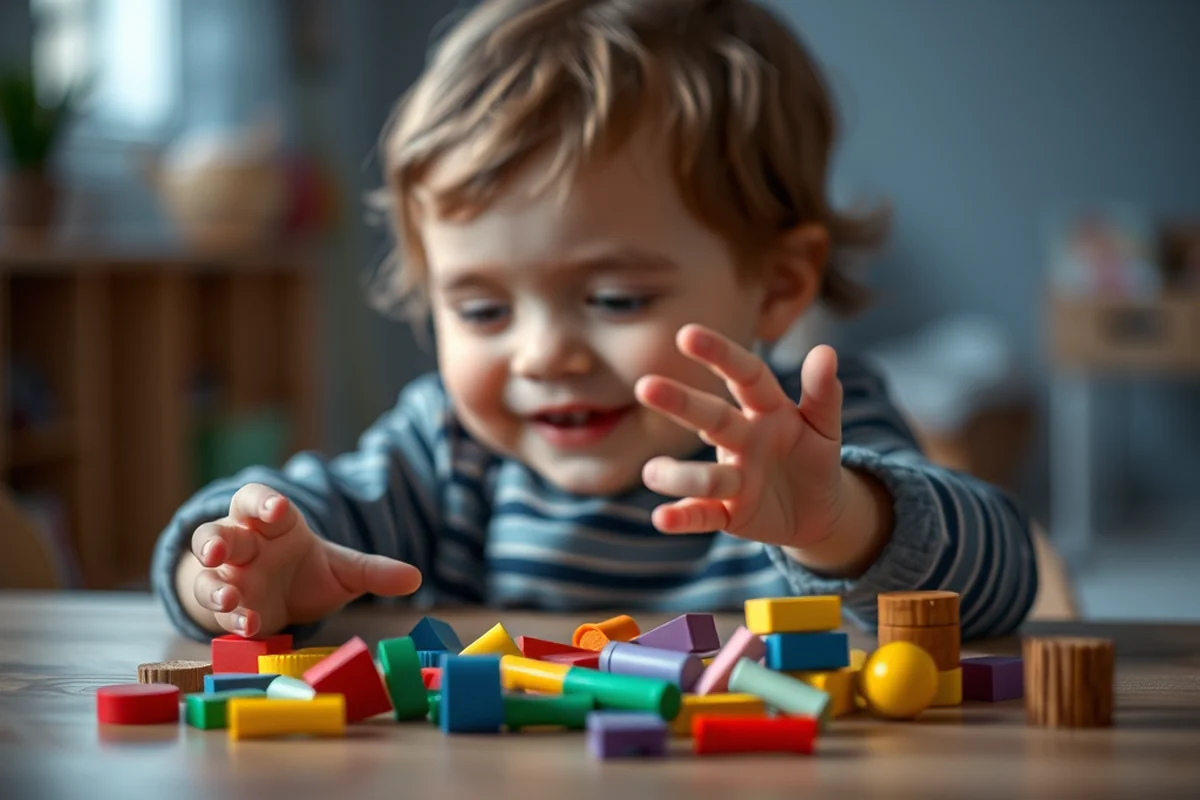
One of the most powerful SEL activities we did was role-playing different scenarios. We'd take turns being 'the friend who took the toy' or 'the friend who was upset.' It was a way for Emma to walk in someone else's shoes and understand how their actions could affect another person. We used stuffed animals and dress-up clothes, which made the activity fun and engaging.
I remember one time when we role-played a situation where a friend was being left out of a game. Emma, pretending to be the friend who was left out, said, 'I feel sad and lonely.' That was a powerful moment because it helped her recognize how actions can hurt others, even if it wasn't intentional. We then discussed better ways to include everyone, and it stuck with her for weeks.
This type of role-play doesn't need any special equipment — it's just about being creative and having a willingness to explore different perspectives. I found that the more we did it, the more Emma began to think about how others might feel in different situations, even outside of our role-play sessions.
Empathy doesn't come from lectures — it comes from practice.
Related: Self Esteem Building Activities For Kids
Related: How to toddlers social interaction skills
Related: Cheap child social skills development
Related: Social And Emotional Learning Books
Related: Social Emotional Learning Books For Kids
Emotional Journals for Reflection and Expression
We started an emotional journal with Emma, where we drew pictures or wrote short sentences about how she felt each day. The journal was a mix of scribbles, stick figures, and even some words like 'sad' or 'excited.' It became a way for her to reflect on her emotions and even notice patterns over time.
One day, Emma drew a picture of herself with a frown and wrote, 'I felt mad because I couldn't find my shoes.' It was a small moment. It showed how she was beginning to understand her own emotions and express them in a way that made sense to her. I noticed that she became more aware of her feelings as time went on, and even started to use the journal on her own.
I used a simple notebook and some crayons to make the journal, and it cost less than $10. The journal didn't have to be fancy — it was about giving Emma a place to express herself and see her emotions over time. Even now, she still uses it as a way to process big feelings, and I'm grateful for that.[1]
Use a notebook and crayons or markers to create a space where your child can express feelings through drawings or words. It's a great way to see their emotional growth over time.
“When my daughter Emma first started kindergarten, she cried every time she left me at the door, even after I'd tried to prepare her with…”— Toddler Social Skills Development editors
Related: How to social life
Storytelling to Explore Feelings and Choices
We read a lot of picture books that dealt with emotions, like 'The Feelings Book' by Todd Parr. These books helped Emma understand that it's okay to feel different emotions and that others can feel the same way. We'd stop and discuss the characters' feelings, and even act out parts of the story ourselves.
One day, we read a story about a child who was nervous about starting school. Emma said, 'I felt nervous too when I started kindergarten.' It was a powerful moment because it helped her connect with the character on a personal level. We talked about how to feel brave and how to ask for help when needed, and she started to use those strategies in real life.
I found that storytelling was a natural way to bring SEL into our lives without it feeling forced. The books we read didn't have to be specifically about emotions — even fairy tales had moments where characters faced fears, made mistakes, or showed kindness. It was all a way to normalize emotional experiences and teach SEL in a gentle way.
Related: What is child development in education
Music and Movement for Emotional Expression
We started using music and dance as a way to explore emotions. We'd listen to different songs and talk about how they made us feel. Some songs made us happy, others sad, and some even angry. We'd dance to the music and use our bodies to express the feelings, which was a great way to release tension and process emotions.
One day, we listened to a song that made me feel calm. Emma said, 'I feel calm too when I hear this song.' She started to associate certain songs with certain emotions, and it became a way for her to regulate her feelings. When she was upset, we'd play a song that made her feel better, and it worked surprisingly well.
This was an activity that didn't cost anything — just a speaker and some music. We even used it during times when Emma was overwhelmed or frustrated, and it helped her find a way to release her emotions without crying or yelling. It was a tool that she started to use on her own as she grew more comfortable with her feelings.
Games That Teach Cooperation and Sharing
We played a lot of cooperative games that required teamwork, like 'Pass the Piggy' or 'Zingo!' These games didn't have winners or losers. They taught Emma how to take turns, share, and work with others. She learned that cooperation could be fun and that working together could lead to better outcomes than competing alone.
One of our favorites was a game where we had to build a tower together without using our hands. It was challenging and required a lot of communication, but it was also a lot of fun. Emma started to understand that sometimes the best way to get something done is by working with others, not by trying to do it all by herself.
I found that these games were a great way to introduce SEL without it feeling like a lesson. They were fun, engaging, and taught real-life skills that Emma could use in school and with her friends. I noticed that she became more patient and more willing to help others after playing these games regularly.
Cooperation is the glue that holds relationships together.
Mindfulness and Breathing for Emotional Regulation
We introduced mindfulness and deep breathing as a way to help Emma manage her emotions when she was upset. We'd sit together and take slow, deep breaths, counting to four on the way in and out. We used a small stuffed animal to help her practice, and it became a way for her to calm down when she was feeling overwhelmed.
One time, Emma was really upset because she had to leave the park and go home. Instead of crying, she took a few deep breaths and said, 'I feel better now.' That was a small but powerful moment for her. It showed how mindfulness could help her regulate her emotions. We've continued to use these techniques even now, and they've become a part of her daily routine.
I found that mindfulness didn't have to be complicated — it was about being present and teaching Emma how to stay calm in the moment. We used simple techniques that she could remember, like counting to four or using a stuffed animal as a reminder. It was a tool that helped her feel more in control of her emotions, and it worked surprisingly well.
🧸 Gentle SEL Activities for Young Kids
Use simple games, emotion faces, and storytelling to introduce SEL to toddlers and preschoolers.
⏱️ Fast-Track SEL for Time-Crunched Parents
Quick, effective SEL activities that can be done in just a few minutes, like deep breathing or emotion charting.
✈️ SEL on the Go for Traveling Families
Use role-play, storytelling, and mindfulness during car rides or waiting in line to teach SEL skills on the move.
👨👩👧👦 SEL for Multiple Kids at Home
Use cooperative games and group storytelling to teach SEL to multiple children at once in a fun and engaging way.
🔄 SEL Reset for Emotional Regression
Use emotion journaling, mindfulness, and role-play to help kids recalibrate and relearn SEL skills during times of regression.
| The mistake | Why it happens | The fix |
|---|---|---|
| Assuming your child will naturally learn SEL skills without guidance. | SEL skills are not learned automatically; they require consistent practice and modeling from adults. | Be intentional about teaching SEL through daily activities and modeling healthy emotional responses. |
| Forcing your child to participate in SEL activities. | Forcing SEL activities can create resistance and stress, making it harder for the child to engage. | Let your child take the lead and choose activities they feel comfortable with. Make SEL a positive and fun experience. |
| Overlooking the importance of consistency in SEL practice. | SEL is most effective when it's practiced regularly over time, not just as a one-time activity. | Incorporate SEL into daily routines and make it a regular part of your child's life. |
| Ignoring your own emotional responses during SEL activities. | Children learn a lot from how adults manage their own emotions, especially during difficult moments. | Model healthy emotional regulation and be open about your own feelings during SEL activities. |
Social Emotional Learning Activities For Kids
Common Questions
How can I teach my child to manage their emotions if they're too young to talk about them?
What if my child is too shy to participate in SEL activities?
How often should I do SEL activities with my child?
Can SEL activities be used with older kids who are already struggling with emotions?
References
- How to Incorporate Social-Emotional Learning into Everyday ... (ace.edu)
- How Early Literacy Supports Social-Emotional Learning - IU Blogs (blogs.iu.edu)
- Big Kids, Episode 2: Social Emotional Learning - Cultivate Learning (cultivatelearning.uw.edu)
- Social Emotional Learning is a BIG issue in a littles world (edu.wyoming.gov)
- 1 Version 1 6_27_2021 Social Awareness & Relationship Skills ... (education.delaware.gov)
Cite this guide
Toddler Social Skills Development (2026). Social Emotional Learning Activities For Kids. https://turntakers.com/social-emotional-learning-activities-for-kids/
Feel free to cite or share this guide.