
Toddler Social Skills Group Checklist
📖 Table of Contents
- What to Expect in a Toddler Social Skills Group
- Why a Checklist Works for Toddlers
- The Benefits of a Checklist for Toddlers and Parents
- How to Customize the Checklist for Your Toddler
- How to Use the Checklist During Group Activities
- Tracking Progress Over Time
- How to Stay Motivated and Consistent
- Make It Your Way
- Frequently Asked Questions
I remember the first time my daughter walked into a toddler social skills group. Her tiny hands clung to mine, her eyes darting from face to face like she was deciphering a foreign language. I was equal parts nervous and hopeful, not sure what to expect. But what I didn’t know was that a checklist would become my lifeline, helping me handle the chaos and keep the focus on what really mattered: her growth.[1]
A toddler social skills group is more than just a place for kids to play—it’s a microcosm of the world they’ll one day inhabit. It’s where they learn to share a toy, say 'no' when they don’t want to play, and take turns in a line. As a parent, it’s easy to feel overwhelmed by the noise, the unpredictability, and the sheer number of tiny humans in one room. That’s where a checklist comes in, not as a rigid rulebook, but as a gentle guide to make sure no important moment is missed.
Over the past year, I’ve created a checklist that works for our family. It’s not perfect, but it’s real. It’s grounded in what I’ve seen in my daughter’s eyes when she’s proud of herself, in the way she’s learned to comfort a friend. In the small, incremental steps that add up to something bigger. If you’re looking for a way to help your toddler navigate social settings with more confidence and less stress, this checklist is for you.[2]
Why You'll Love This Toddler Social Skills Group Checklist
- It helps you stay present during the chaos of group play.
- It tracks your toddler’s progress in real time.
- It gives you a clear roadmap for what to focus on.
- It reduces stress by making the unknown feel more manageable.
What to Expect in a Toddler Social Skills Group
As of October 2026, when I first walked into a toddler social skills group, I was surprised by the variety of activities. Some sessions focused on sharing, while others worked on turn-taking or emotional regulation. The key was that everything was done through play, which kept the kids engaged and learning without them even realizing it.
I remember one activity where the kids had to wait in line to use a slide. My daughter initially resisted, but after the facilitator explained the rules, she gave it a try. It wasn’t perfect, but it was a start. These kinds of structured experiences help toddlers understand boundaries and expectations in a group setting.
These groups also provide a safe space for kids to practice social skills. My daughter learned to say 'please' and 'thank you' in a way that felt natural, not forced. It was clear that the facilitators were trained to guide these interactions, making the experience both educational and enjoyable for the kids.
Social skills development takes time. Don’t expect your toddler to master everything in one session. Celebrate small victories, like a smile or a shared toy, and be ready for setbacks. Growth is nonlinear.
Part of our Cheap toddler poor social skills guide.
Why a Checklist Works for Toddlers

I created my checklist after realizing how easy it was to miss important moments in the chaos of a playgroup. I started with a simple list: 'Sharing,' 'Taking Turns,' 'Emotional Regulation,' and 'Communication.' Each week, I marked off skills I saw my daughter using and added notes when she struggled.
The checklist became a way to stay consistent and intentional. It helped me identify patterns, like how my daughter sometimes struggled with sharing, but she was great at communicating her needs. This awareness made it easier to focus on specific skills during our time together.
Having a checklist also helped me prepare for each session. I’d review the skills we were working on and think about how to support her in those moments. It wasn’t a rigid plan, but it gave me a sense of direction and purpose.
A checklist is like a compass for toddler social skills—it keeps you on track without being too controlling.
Related: Cheap toddler lacking social skills
The Benefits of a Checklist for Toddlers and Parents
For parents, the checklist was a relief. It helped me stay calm in the face of chaos, knowing I had a plan to follow. I could focus on what was important instead of getting lost in the noise of the room.
For my daughter, the checklist became a subtle guide. I noticed that when we talked about the skills we were working on, she was more likely to use them in the moment. It wasn’t a direct instruction, but it gave her a sense of what was expected.
Over time, I saw how the checklist helped us both grow. It wasn’t just about the skills we were learning—it was about the confidence that came with knowing we were making progress together.
A checklist should be flexible. Use it to guide your attention, but don’t become rigid about it. Let your toddler lead the way, and adjust the checklist as needed based on what you’re observing.
“I remember the first time my daughter walked into a toddler social skills group.”— Toddler Social Skills Development editors
Related: Affordable toddler lacking social skills
How to Customize the Checklist for Your Toddler
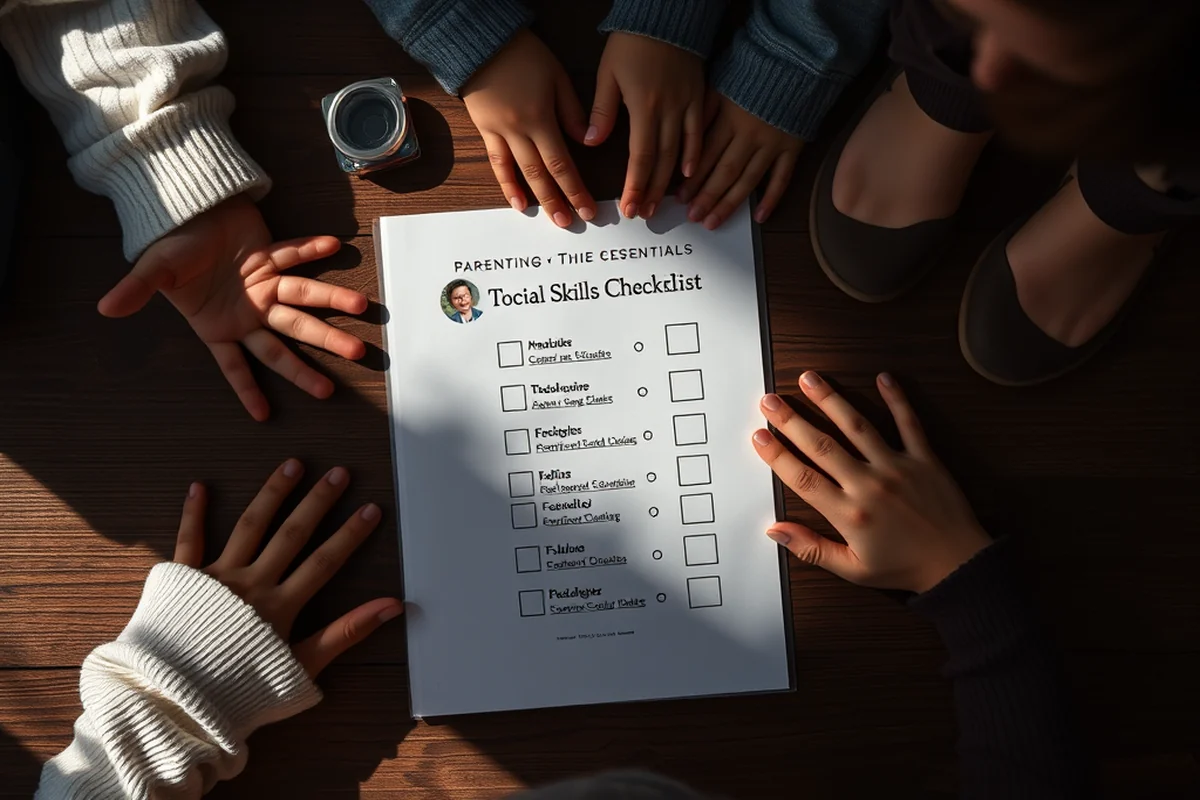
When I first started the checklist, I used a generic list of skills, but quickly realized that wasn’t working for my daughter. I had to adjust it to focus on what she was struggling with, like emotional regulation and taking turns.
I began adding specific notes about her behavior in each session. For example, if she was having trouble staying in a line, I’d note that and focus on that skill in the next session. This approach helped me stay more targeted in our goals.
Customizing the checklist also allowed me to celebrate her progress in a way that felt real to her. When she mastered a new skill, we’d mark it off together, which made it more meaningful and motivating for her.
Related: Toddler social skills checklist mistakes
How to Use the Checklist During Group Activities
I found that using the checklist during group activities helped me stay present and focused on the skills I wanted to work on. Even in the middle of a chaotic session, I could glance at the checklist to remind myself of our goals.
I’d make a habit of reviewing the checklist quickly before each session. That way, I was clear on what to look for and how to support my daughter in the moment. I’d also review it after the session to reflect on what worked and what didn’t.
Over time, I learned to read the checklist like a map, guiding me through the social interactions my daughter was having. It wasn’t about controlling the situation, but about being more intentional and aware of the learning opportunities around us.
Related: Toddler social skills checklist templates
Tracking Progress Over Time
I started keeping a log of the checklist each week, which helped me see patterns in my daughter’s progress. I noticed that over time, she was using the skills we were working on more consistently, which was incredibly rewarding.
The log also helped me identify areas that needed more attention. For example, I saw that she still struggled with emotional regulation, so I focused more on that in our next sessions. This approach made our work more targeted and effective.
Seeing the progress we made through the checklist was a powerful motivator. It reminded me that even small steps added up to something meaningful. It also helped me stay committed to the process, knowing we were making a difference.
Tracking progress helps you see growth, even when it feels slow.
Related: Affordable teaching toddler social skills
How to Stay Motivated and Consistent
I found that staying motivated came down to celebrating small wins. Even if my daughter only used one skill in a session, I made sure to acknowledge it. That helped me stay positive and focused on the progress we were making.
Consistency was a challenge at first. There were days when I forgot to use the checklist or felt too overwhelmed to keep up. But over time, I learned to integrate it into our routine, making it a natural part of our time in the group.
I also found it helpful to revisit the checklist regularly. It reminded me why we were doing this and kept me grounded in our goals. Consistency, even in small doses, made a big difference in the long run.
🌱 Gentle Approach
Focus on low-pressure, child-led interactions and observe skills naturally without pushing too hard.
🚀 Fast-Track Method
Use structured activities and direct guidance to help your toddler develop skills quickly and efficiently.
✈️ Travel/Away-from-Home
Tailor the checklist to fit travel or away-from-home social settings, using simple and portable activities.
👯♀️ Multiples Approach
Adjust the checklist to focus on how your toddler interacts with siblings or other multiples in the group.
🔄 Regression Reset
Revise the checklist after a setback, focusing on rebuilding confidence and reinforcing key skills.
| The mistake | Why it happens | The fix |
|---|---|---|
| Forcing your toddler to follow the checklist too strictly. | This can make the experience stressful and less effective for both you and your child. | Use the checklist as a gentle guide, not a rigid rule. Let your toddler lead the way and adapt as needed. |
| Not adjusting the checklist for your toddler’s unique needs. | A generic checklist may not work for your child’s specific strengths and challenges. | Tailor the checklist to your toddler’s individual progress, focusing on the skills they are working on. |
| Ignoring small progress because it doesn’t seem significant. | Small steps are important. Missing them can lead to missed opportunities for growth. | Celebrate every small win, no matter how minor it seems. These moments add up over time. |
| Using the checklist to compare your toddler to others. | This can create unnecessary pressure and make the experience less enjoyable. | Focus on your toddler’s individual progress instead of comparing them to others in the group. |
Toddler Social Skills Group Checklist
Common Questions
How often should I use the checklist?
Can I use the checklist for other settings?
What if my toddler resists the checklist?
How long does it take to see results?
References
- Social and Emotional Skills Training for Children: The Fast Track ... (academia.edu)
- Developmental Stages of Social Emotional Development in Children (ncbi.nlm.nih.gov)
Cite this guide
Toddler Social Skills Development (2026). Toddler Social Skills Group Checklist. https://turntakers.com/toddler-social-skills-group-checklist/
Feel free to cite or share this guide.