
Social Communication Skills Toddler Checklist

📖 Table of Contents
- What is a social communication skills toddler checklist?
- How to create your own checklist
- Why consistency matters when using the checklist
- Tracking progress with the checklist
- Using the checklist during playdates and social events
- The importance of positive reinforcement
- When to seek professional support
- Make It Your Way
- Frequently Asked Questions
When my daughter turned two, I found myself constantly on edge during playdates, unsure if she was learning to share or just being overly clingy. I watched her with a mix of pride and confusion as she would point at a toy and say, 'mine,' then stare at another child with wide eyes as if trying to decode their next move. I knew something was off, but I didn’t have a clear way to identify or address it. That’s when I discovered the power of a social communication skills toddler checklist—a simple tool that helped me see the subtle gaps in her understanding of social cues, turn-taking. Emotional regulation.
I remember the first time I sat down with the checklist and walked through it with my daughter. It wasn’t a magic wand, but it was a starting point. We played games, acted out scenarios, and slowly began to understand where she was struggling. The checklist didn’t just highlight what was missing—it gave me a roadmap for improvement. I was able to track progress, celebrate small wins, and adjust my approach based on her needs. It was empowering to feel like I was no longer just guessing, but actually helping her build the skills she needed to connect with others.[1]
Now, I use the social communication skills toddler checklist as a routine part of our daily life. It’s not something we do every single day, but it’s a consistent touchpoint that helps us stay focused on what matters—helping my daughter handle the complex world of social interaction. The checklist has become a quiet but powerful tool that has helped her grow in ways I never imagined. It’s not just about fixing deficits; it’s about building confidence, empathy, and the kind of communication skills that will serve her for a lifetime.[2]
Why You'll Love This Checklist
- It gives you a clear, actionable way to monitor your toddler’s progress in social communication skills.
- It helps identify subtle gaps in interaction, which might be hard to spot on your own.
- It provides a framework for practicing and reinforcing skills in a natural, engaging way.
- It builds your confidence as a parent by showing measurable results over time.
What is a social communication skills toddler checklist?
As of October 2026, a social communication skills toddler checklist is a tool that helps parents observe, document, and nurture their child’s ability to interact with others. It includes behaviors such as making eye contact, following directions, sharing, and responding to emotions. The checklist acts as a guide for both parents and children, breaking down complex skills into manageable steps.
I used a checklist that included specific items like 'points to objects when naming them' and 'responds to simple questions with a word or gesture.' These small, observable behaviors helped me see exactly where my daughter was excelling and where she was struggling. By breaking down the skills into bite-sized steps, I was able to target areas that needed more attention without overwhelming her.
These checklists are not meant to diagnose or label a child. Instead, they serve as a way to measure growth, celebrate progress, and identify areas that might benefit from more focused intervention. Using a checklist with my daughter helped me feel like I was genuinely supporting her development, not just watching it happen.
Speak slowly and use short, clear sentences when practicing social skills. This helps your toddler understand what is expected and builds their confidence.
Part of our Toddler learning social skills step by step guide.
How to create your own checklist

Creating a social communication skills toddler checklist begins with identifying the key areas you want to focus on. These might include eye contact, imitation, following directions, or responding to emotions. I focused on eye contact and turn-taking first, as I noticed my daughter had trouble with both.
I used a notebook and wrote down skills that were relevant to my daughter’s age and development. For each skill, I added a brief description and a space for notes. For example, under 'eye contact,' I wrote, 'Maintains eye contact for at least 3 seconds during interaction.' I also added a section for observations, which helped me track her progress over time.
Tailoring the checklist to your child’s needs is important. If your child is nonverbal, focus on gestures or pointing. If they’re struggling with sharing, include activities that encourage taking turns. The key is to make the checklist personal and relevant to your child’s journey.
Start small, and let your child’s progress guide the way.
Related: Top toddler social skills activities
Why consistency matters when using the checklist
Consistency is key when using a social communication skills toddler checklist. When I used the checklist inconsistently, my daughter would sometimes forget the activities and lose interest. But when I stuck to a routine, she began to anticipate and look forward to the time we spent practicing.
I made it a point to use the checklist every morning for 10 minutes before breakfast. This short but regular time helped my daughter build a habit of focusing on social skills. It also gave me a chance to observe her in a calm, familiar setting, which made it easier to track her progress.
Consistency doesn’t mean you have to use the checklist every single day. Even using it a few times a week can make a big difference. The goal is to create a rhythm that works for your family and your child’s learning style.
Make the checklist fun by turning each task into a mini-game. For example, 'Find the toy' becomes 'Let’s search for the blue car together!' This keeps your toddler engaged and excited to learn.
“When my daughter turned two, I found myself constantly on edge during playdates, unsure if she was learning to share or just being overly clingy.”— Toddler Social Skills Development editors
Related: Top toddler social and emotional skills
Tracking progress with the checklist
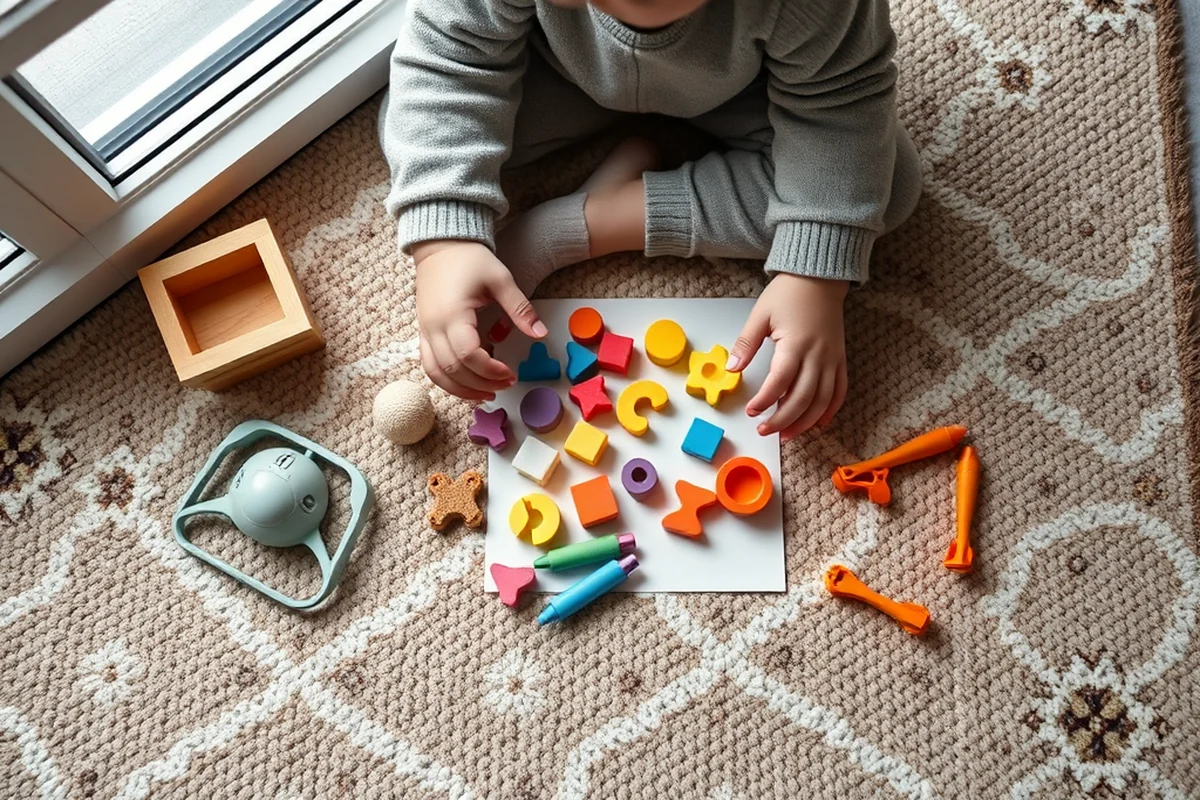
Tracking progress with a social communication skills toddler checklist is an essential part of the process. I kept a log of my daughter’s progress, noting when she made eye contact for longer periods or when she started to use more words during interactions. This helped me see the small but meaningful changes over time.
I celebrated each milestone with something simple, like a sticker or a praise. When my daughter finally said 'mine' and then handed the toy over to another child, I gave her a sticker and told her how proud I was. These moments reinforced her efforts and motivated her to keep trying.
Tracking progress also helped me adjust the checklist as needed. If she was struggling with a particular skill, I could focus on that more. If she was doing well, I could move on to the next skill. It was a flexible, responsive approach that worked for both of us.
Related: Top social communication skills toddler
Using the checklist during playdates and social events
I found that using the checklist during playdates was one of the most valuable experiences. It helped me stay focused on my daughter’s behavior and guide her in the moment. If she wasn’t sharing, I would gently remind her of the 'taking turns' skill on the checklist. If she was distracted, I would prompt her with a simple question like, 'What’s the name of that toy?'
I also used the checklist during visits to the park and family gatherings. These environments provided natural opportunities for my daughter to practice skills like making eye contact, following directions, and responding to others. The checklist helped me stay consistent and provide support when needed.
It was especially helpful to have the checklist with me during these events. It gave me a reference point for what to look for and how to encourage my daughter without making her feel pressured. It was a quiet but powerful tool that helped her grow in real-world situations.
Related: Affordable toddler social skills activities
The importance of positive reinforcement
Positive reinforcement is a crucial part of using a social communication skills toddler checklist. When my daughter made progress, I made sure to acknowledge it immediately. Whether it was a simple 'Great job!' or a sticker, it helped her feel proud and encouraged her to keep trying.
I found that praising the effort, not just the result, was most effective. If she tried to take turns but got distracted, I would say, 'You did so well trying to share! Let’s try again next time.' This helped her understand that effort was valuable, even if perfection wasn’t always the goal.
Positive reinforcement also helped her feel more confident. As she began to practice the skills on the checklist, she started to see herself as capable and competent. This made a huge difference in her willingness to try new things and engage with others.
Praise the process, not just the outcome.
Related: Cheap social communication skills toddler
When to seek professional support
While a social communication skills toddler checklist is a helpful tool, it’s not a substitute for professional support. If your child is not showing progress after several weeks of using the checklist, it might be time to reach out to a speech therapist or developmental specialist.
I noticed that my daughter was struggling with more than just social skills—she had trouble with language and emotional regulation. After using the checklist for a few weeks, I decided to consult a speech therapist. They provided additional strategies and tools that helped my daughter make more progress.
Seeking professional support doesn’t mean you’ve failed. It means you’re being proactive and taking steps to help your child. It’s important to know that you’re not alone, and that there are resources available to support you and your family.
🌼 Gentle
This approach focuses on low-pressure, child-led interactions that encourage natural skill development.
🚀 Fast-track
This method is ideal for parents looking to make rapid progress through structured, goal-oriented activities.
✈️ Travel/away-from-home
This variation is designed for families who need to use the checklist during trips or in unfamiliar environments.
👶 Multiples
This approach is tailored for parents of twins or siblings, helping them practice skills simultaneously.
🔄 Regression Reset
This method is for parents who have noticed a setback in their child’s development and want to get back on track.
| The mistake | Why it happens | The fix |
|---|---|---|
| Trying to cover too many skills at once. | This can overwhelm your toddler and make the checklist feel like a chore rather than a fun activity. | Focus on one or two skills at a time and build from there. Start with the ones your toddler is most comfortable with. |
| Not adapting the checklist to your child’s needs. | A one-size-fits-all approach may not work for your child’s unique learning style or developmental stage. | Tailor the checklist to your child’s abilities and interests. Use it as a guide, not a strict set of rules. |
| Using the checklist as a form of punishment. | This can create negative associations with the checklist and make your child avoid the activities. |
Social Communication Skills Toddler Checklist
Common Questions
How often should I use the checklist?
Can I use the checklist with my child if they are nonverbal?
What if my toddler resists the activities on the checklist?
How long should I expect to see results?
References
- NCT04181723 | Study of Trofinetide for the Treatment of Girls and ... (clinicaltrials.gov)
- Participating in Grow NJ Kids - Child Care In New Jersey (childcarenj.gov)
Cite this guide
Toddler Social Skills Development (2026). Social Communication Skills Toddler Checklist. https://turntakers.com/social-communication-skills-toddler-checklist/
Feel free to cite or share this guide.
Toddler Social Skills Checklist
Age-banded toddler social skills checklist with practice tips.
Open it free →