
Toddler Activities For Social Development Templates

📖 Table of Contents
- The Power of Playdates as Social Templates
- Cooperative Games Build Teamwork
- Storytelling Encourages Empathy and Listening
- Using Music and Rhythm for Social Learning
- Role-Playing Teaches Perspective and Social Norms
- Using Visual Aids to Encourage Turn-Taking
- Social Development Through Group Activities
- Make It Your Way
- Frequently Asked Questions
When my toddler, Leo, first started pushing his way into the grocery store, I realized that social development wasn’t just about sitting quietly in a high chair — it was about learning to handle the world with other people. I had no idea that simple interactions, like sharing a snack with a friend or waiting for his turn on the slide, would become the building blocks of his emotional intelligence. That’s when I started looking for toddler activities for social development templates — a way to create meaningful, repeatable moments that would help him build confidence, empathy and communication skills.
The journey was messy, but it was also full of small victories. I remember the first time Leo held hands with a friend and walked together across the playground — a moment that felt like a tiny step toward a bigger future. I wanted to capture these moments and make them intentional, not just random. That’s how I began to collect and refine toddler activities for social development templates, crafting a toolkit that could be used at home, in daycare or during family outings.
These templates are more than just ideas — they’re blueprints for creating opportunities where toddlers can practice listening, sharing, and understanding others. Whether it’s a game with a friend or a cooperative activity with a sibling, each template is designed with a specific goal in mind, backed by my own experience and the feedback from other parents I’ve spoken with over the years.[1]
Why You'll Love This Social Development Toolkit
- Easy to adapt for home, daycare, or outings
- Built on real-life interactions that matter
- Focuses on emotional and social growth, not just fun
- Provides a structured yet flexible framework for learning
The Power of Playdates as Social Templates
As of November 2026, I found that structured playdates — with a clear plan like a ‘sharing game’ or a ‘turn-taking activity’ — helped my toddler understand and practice social skills. For instance, we used a simple ‘pass the ball’ game where Leo had to wait his turn and then pass the ball to someone else. Over time, he started to understand that taking turns is a key part of playing with others.
I often brought along a small basket with a few items like blocks or puppets. These became the focus of the playdate, allowing us to guide the interaction and keep it positive. It’s amazing how much a toddler can learn in just 20 minutes of focused play with a friend.
One of the best parts of these playdates was that they became a social development template I could use again and again. I’d tweak the activity slightly based on Leo’s interests, and over time, he started to take the lead. This not only boosted his confidence but also gave me a sense of accomplishment as a parent.
Pack a small bag with a few toys, a timer, and a clipboard to jot down your toddler’s progress. This helps make playdates feel more intentional and focused.
Part of our Toddler activities that promote social development for beginners guide.
Cooperative Games Build Teamwork

I started incorporating cooperative games into our routine, like building a tower with blocks or completing a puzzle together. These games helped Leo understand that working with others can lead to greater success than trying to do things alone.
One of the most effective games we played was ‘Pass the Parcel’ with a twist. Instead of music, we used a timer, and we had to pass the parcel to the next person after each round. It taught Leo patience, listening, and the joy of shared effort.
After a few weeks of playing these games, I noticed that Leo was more willing to help his older sibling with tasks like picking up toys or sharing his snacks. This was a huge shift — and it all started with these cooperative activities.
Working together doesn’t just build a tower — it builds a foundation for friendship.
Related: Toddler social and emotional development activities
Storytelling Encourages Empathy and Listening
I began reading stories to Leo that focused on emotions and social situations, like ‘The Color Monster’ or ‘The Feelings Book.’ We talked about how the characters felt and what they could do to make themselves feel better. These conversations helped Leo understand the concept of empathy and how to express his own feelings.
I also created ‘storytime circles’ where we would sit on the floor and take turns telling parts of the story. This helped Leo practice listening to others and contributing in a respectful way. He loved being the ‘storyteller’ and would get so excited when it was his turn.
Over time, I noticed that Leo was more willing to acknowledge his own emotions and those of others. He began to use phrases like ‘I feel sad’ and ‘She feels happy,’ which was a huge step in his social development journey.
Set up a cozy spot with pillows, a small rug, and a few picture books. This helps create a calm, focused atmosphere that makes storytelling more engaging for your toddler.
“When my toddler, Leo, first started pushing his way into the grocery store, I realized that social development wasn’t just about sitting quietly in a…”— Toddler Social Skills Development editors
Related: Toddler activities that promote social development alternatives
Using Music and Rhythm for Social Learning
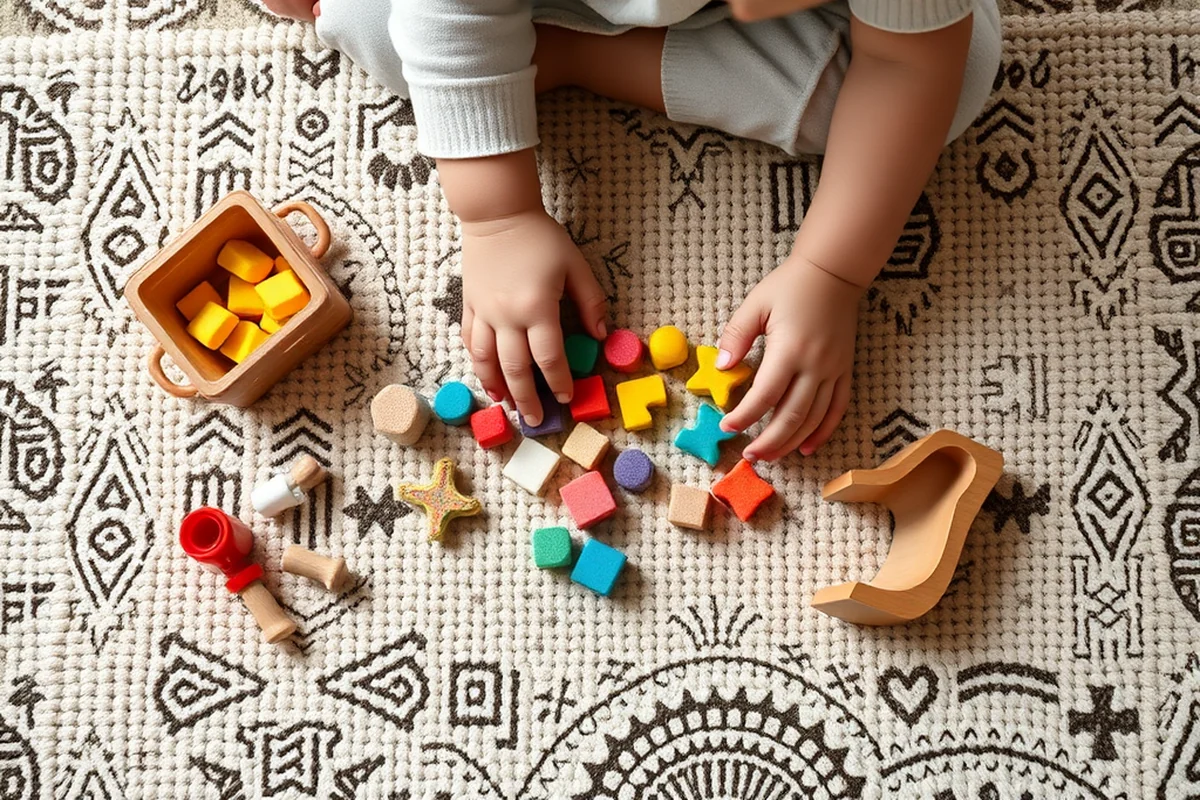
I found that music was a great way to get Leo excited about learning. We used songs like ‘The Hokey Pokey’ and ‘If You’re Happy and You Know It’ to teach him how to follow directions and move together with others.
One of our favorite activities was a ‘dancing circle’ where we all stood in a circle and danced together. We took turns leading the dance, which helped Leo learn how to listen and follow directions. He loved being the one who led the song and would often get so excited about it.
These activities not only helped Leo develop better listening skills but also gave him a chance to bond with others in a fun and natural way. It was amazing to see how much he could learn through music and rhythm alone.
Related: Toddler activities that promote social development comparison
Role-Playing Teaches Perspective and Social Norms
I started using role-play scenarios to help Leo understand different perspectives, like pretending to be a doctor, a teacher, or even a parent. These scenarios helped him learn how to interact with others in different social contexts.
One of our favorite role-play games was ‘Family Time,’ where we would act out everyday situations like going to the grocery store or visiting the park. This helped Leo understand social norms and how to behave in different settings.
I noticed that after playing these role-play games, Leo was more aware of how others felt and was better at navigating social situations. It was a fun and effective way to teach him about empathy and social behavior.
Related: Toddler activities that promote social development vs
Using Visual Aids to Encourage Turn-Taking
I started using visual aids like picture cards and timers to teach Leo how to take turns. For instance, we used a simple ‘turn-taking card’ that showed two pictures: one of a person holding the toy and one of a person waiting. This helped Leo understand the concept of taking turns.
I also used a timer to help us keep track of how long each person could play with the toy. We would start the timer and take turns, and when it beeped, we would pass the toy to the next person. This helped Leo learn how to be patient and wait his turn.
After a few weeks of using these visual aids, I noticed that Leo was more willing to wait his turn and share his toys with others. It was a small but important step in his social development journey.
A timer may be simple, but it helps toddlers learn the value of waiting and taking turns.
Related: Toddler social and emotional development activities vs
Social Development Through Group Activities
I started participating in group activities with Leo at the local community center, where we had opportunities to interact with other toddlers and their parents. These activities helped Leo learn how to communicate with others and practice his social skills in a real-world setting.
One of the most effective group activities we participated in was a ‘circle time’ where we would sit in a circle and take turns sharing something we liked or doing a small activity together. This helped Leo learn how to listen to others and contribute to the group in a respectful way.
Over time, I noticed that Leo was more confident in social situations and was more willing to interact with others. These group activities not only helped him develop his social skills but also gave him a sense of belonging and connection with others.
🐢 Gentle Social Learning
For parents who prefer a slow, steady approach to social development, these activities focus on creating a calm and supportive environment for learning.
⚡ Fast-Track Social Building
Ideal for parents who want to see quick results through structured, high-impact social activities that can be done in a short amount of time.
✈️ Travel/Out-of-Home Activities
Perfect for parents who are frequently on the go, these activities are designed to be done in public spaces, parks, or during family trips with minimal preparation.
👶 Activities for Multiples
Tailored for parents with more than one toddler, these activities help siblings develop social skills together in a shared environment.
🔄 Regression Reset
Designed for parents who are helping their toddlers recover from a social setback, these activities are focused on rebuilding confidence and relearning key social skills.
| The mistake | Why it happens | The fix |
|---|---|---|
| Forcing the child to participate in an activity they’re not interested in. | This can lead to resistance and make the activity feel more like a chore than a fun learning experience. | Try introducing the activity in a different way or at a different time. Let the child lead the activity when possible. |
| Overloading the child with too many social activities at once. | This can be overwhelming for toddlers and may lead to frustration or disinterest. | Start with one or two activities at a time and gradually increase as the child becomes more comfortable. |
| Neglecting the child’s emotional needs during social development activities. | Ignoring the child’s emotions can make them feel unsupported and may hinder their ability to learn and grow. | Be attentive to the child’s emotional needs and provide reassurance and support throughout the activity. |
| Assuming that all children will respond to the same type of social activity. | Every child is different, and what works for one may not work for another. It’s important to be flexible and adapt activities to the child’s individual needs and interests. | Observe the child’s responses and adjust the activities accordingly. Try different approaches until you find what works best for them. |
Toddler Activities For Social Development Templates
Common Questions
How long should a social activity last for a toddler?
Can these activities be used with older children as well?
What if my toddler refuses to participate in the activity?
How often should I use these social development activities?
References
- Promoting creativity in early childhood education - PMC - NIH (pmc.ncbi.nlm.nih.gov)
Cite this guide
Toddler Social Skills Development (2026). Toddler Activities For Social Development Templates. https://turntakers.com/toddler-activities-for-social-development-templates/
Feel free to cite or share this guide.
Toddler Social Skills Checklist
Age-banded toddler social skills checklist with practice tips.
Open it free →